Key Takeaways: Activewear & Seamless Manufacturing in Portugal: The 2026 Technical Sourcing Guide
- Full-Package Production (FPP) in Portugal: Portugal Textile connects fashion brands and creators with 25+ GOTS, OEKO-TEX® Standard 100, and GRS certified factories in Northern Portugal.
- Flexible Low MOQs & Rapid Turnaround: Launch or scale collections with flexible minimum order quantities (150–300 pcs per style), 2–3 week sampling, and 4–6 week bulk production with duty-free EU logistics.
- Digital Tech Pack Onboarding: Prepare factory-ready specifications in minutes using our Free AI Tech Pack Maker or request a tailored B2B quote via Create My Collection.
| Production Phase | Standard Timeline | Technical Specifications & Deliverables | Certifications & Standards |
|---|---|---|---|
| 1. Tech Pack & BOM Spec | 1–3 Days | CAD flats, graded measurement chart, Bill of Materials & construction callouts | ISO / EU Sizing Standards |
| 2. Sustainable Fabric Sourcing | 1 Week | Organic cotton, ECONYL®, TENCEL™ Lyocell, European Flax® linen & recycled blends | GOTS, OEKO-TEX® 100, GRS |
| 3. Pattern & Proto Sampling | 2–3 Weeks | Digital 3D/CAD pattern drafting, physical prototype & Salesman Samples (SMS) | Pre-shrunk & lab-tested |
| 4. Bulk Production (Low MOQ) | 4–6 Weeks | 150–300 pcs/style MOQ, Pantone® garment dye, screen/puff print & embroidery | EU REACH & Fair Labor |
| 5. Quality Control & Dispatch | 2–4 Days | In-line & final AQL 2.5 inspection, custom woven labels, eco-packaging & shipping | DPP Traceability Ready |
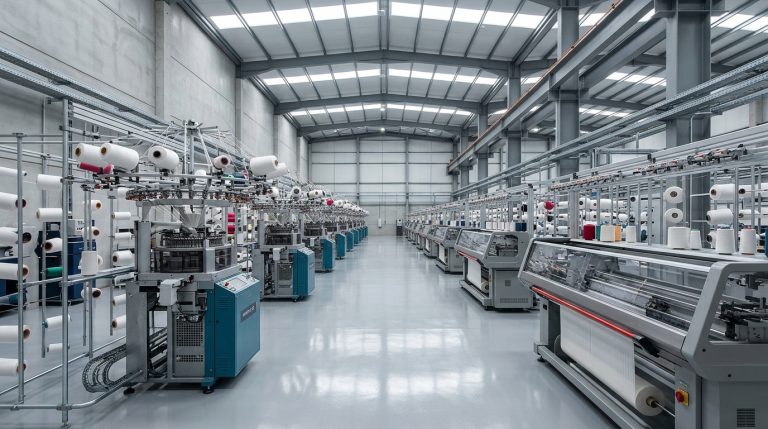
Northern Portugal (Barcelos & Braga) is Europe’s primary production hub for technical activewear, combining Santoni® 3D circular seamless knitting with high-precision ISO 607 6-needle flatlock assembly. Core specifications for premium performance lines require 220–280 GSM Interlock knits (75% Recycled Polyamide 6.6 / 25% Lycra® Sport) for certified 100% squat-proof opacity, with flexible MOQs starting at 150–250 units per style, 2–4 week physical sampling, and zero-tariff 48–72h road transit across the EU.
1. How Is Technical Activewear Manufactured in Portugal?
Manufacturing performance activewear requires fundamentally different engineering compared to casual apparel. While a standard jersey tee requires basic single-needle overlocking, activewear must withstand continuous multi-directional tensile stress, high perspiration moisture loads, and intimate friction against the skin during extreme biomechanical movement.
Portugal’s technical activewear cluster operates in a hyper-integrated geographical radius between Barcelos, Braga, and Guimarães. Here, world-class yarn extruders, circular knitting mills, certified eco-dye houses, and cut-and-sew assembly ateliers work in seamless coordination. The manufacturing workflow is structured around four technical phases:
- Digital Modulus & 3D Stress Mapping: CAD drafting calibrated for 4-way stretch elongation (accounting for 15% to 25% negative ease depending on compression rating).
- Precision Fabric Knitting: Sourcing high-filament micro-polyamide or electronic tubular knitting on Italian Santoni® cylinders.
- Anti-Chafe Clean Assembly: ISO 607 6-needle flatlock seams, ultrasonic bonded edge hems, and heat-welded framilon elastic waistbands.
- Squat-Proof & Dynamic Recovery Lab Testing: 100% light-transmission audit at 150% elongation and 50-wash dimensional stability audits.
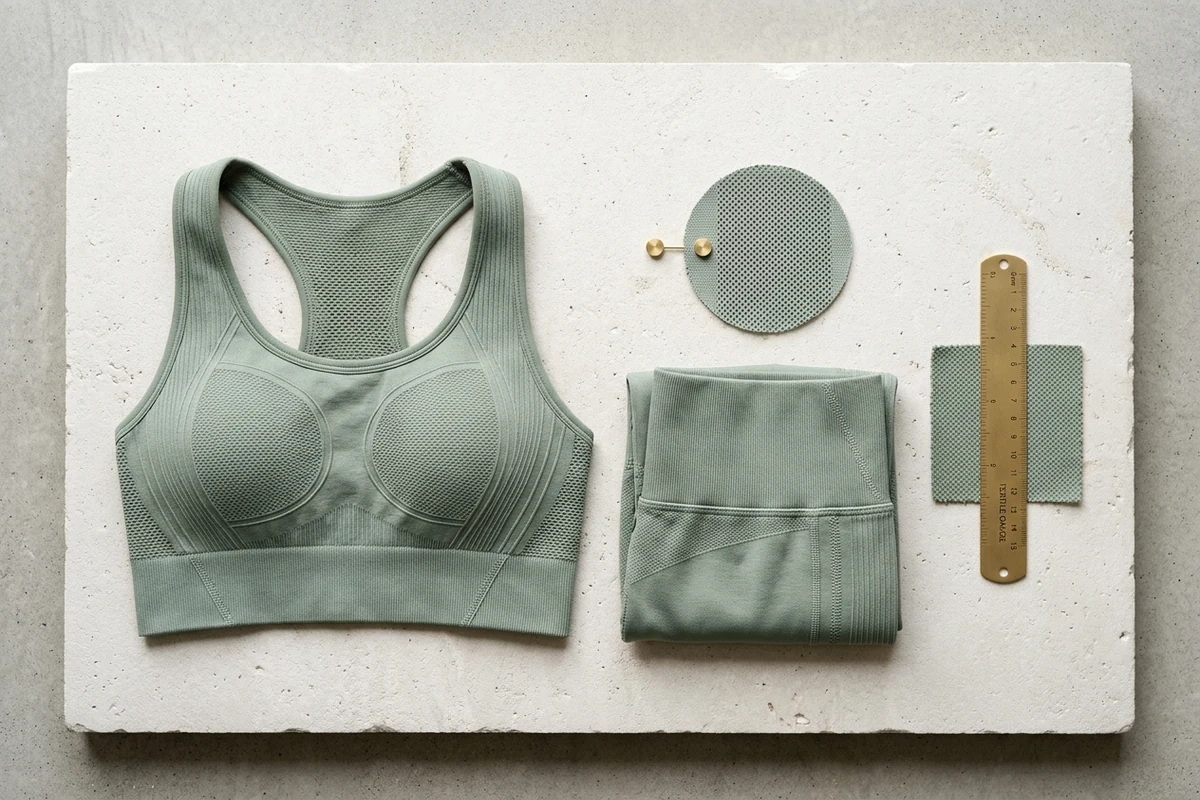
Cut-and-Sew Activewear is patterned from flat rolls of performance fabric, allowing intricate multi-panel styling, contrast mesh inserts, and high-support sports bra construction using 6-needle flatlock seams. 3D Seamless Activewear is knitted directly into cylindrical tubes on electronic circular machines (Santoni®), eliminating side seams entirely, reducing fabric scrap waste by 25–30%, and enabling body-mapped compression and jacquard ventilation to be knitted directly into the garment.
2. Technical Comparison: Seamless vs. Cut-and-Sew Activewear
Choosing between seamless technology and cut-and-sew construction dictates your collection’s aesthetic, production minimums, and fit performance. Below is the technical breakdown used by our pattern engineers:
| Specification | 3D Seamless Knitting (Santoni®) | Cut-and-Sew (ISO 607 Flatlock) |
|---|---|---|
| Knitting Machinery | Electronic circular knitting cylinders (Santoni SM8-TOP2V) | High-gauge warp/weft circular jersey and interlock machines |
| Seam Construction | Tubular body (zero side seams); gusset joined with clean overlock | 4-needle / 6-thread flatlock seams (ISO 607) flat against skin |
| Fabric Waste (Pre-Consumer) | Ultra-low (3% to 5% offcut waste) | Standard pattern marker cutting (15% to 22% scrap) |
| Zoned Compression | Engineered directly into knit stitch (ribbing, mesh eyelets, tension) | Achieved via multi-panel cutlines, power mesh inserts & bonding |
| Flexible Production MOQs | Flexible (from 250–350 units per colorway) | Highly flexible (from 150–200 units per style) |
| Ideal Product Categories | Base layers, second-skin leggings, seamless crop tops, biker shorts | High-impact sports bras, running tights with pockets, technical jackets |
Leggings achieve true 100% squat-proof opacity at 240 to 280 GSM using a double-knit Interlock structure (typically 75% Polyamide 6.6 and 25% Lycra® elastane). Single jersey fabrics under 220 GSM fail back-stretch opacity audits when subjected to full 90-degree athletic squats. In addition, yarn fineness must be Dtex 44/34 or higher, and dyeing must use black-yarn core extrusion or disperse dyeing to prevent fabric grinning under extension.
3. Technical Fabric Specifications & Squat-Proof Engineering
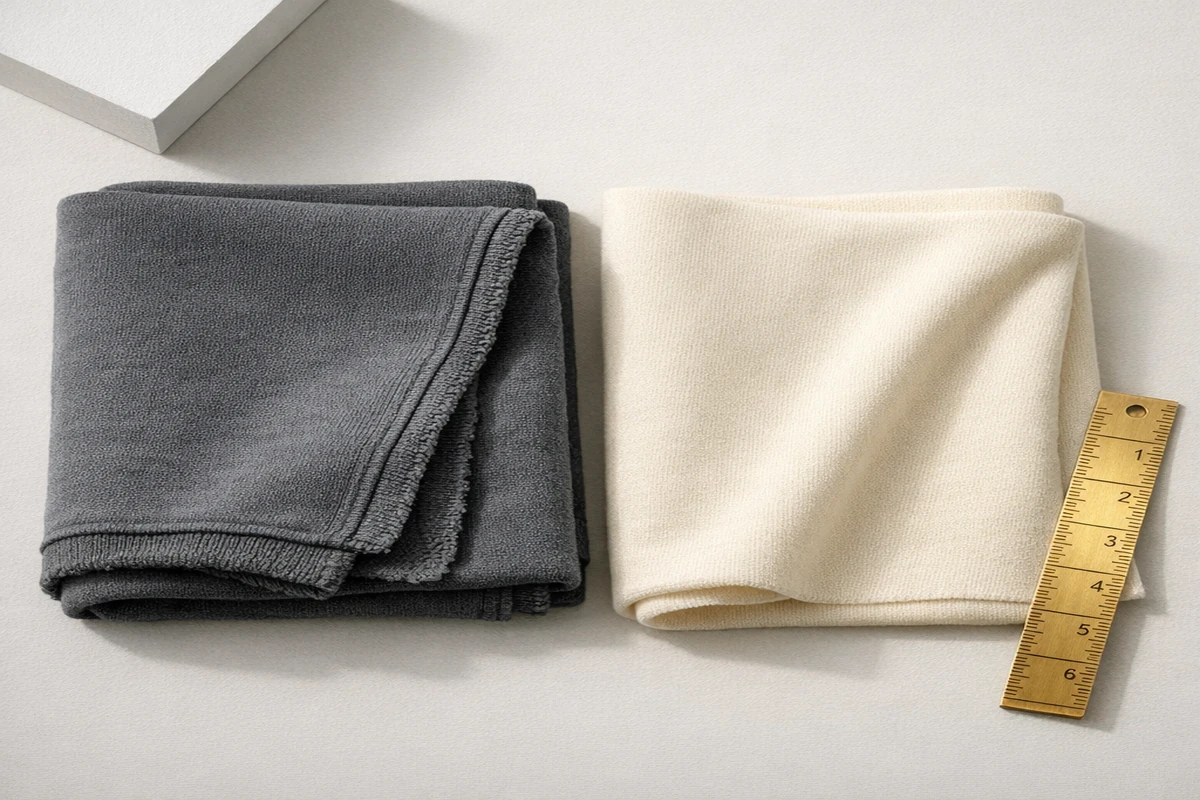
In luxury and high-performance activewear, fabric opacity is the number one consumer metric. The table below outlines fabric weights, gauge counts, and performance characteristics engineered at our Portuguese mills:
| Fabric Type & Composition | Weight (GSM) | Knitting Gauge | Squat-Proof Rating | Handfeel & Finish |
|---|---|---|---|---|
| High-Compression Interlock 73% Micro-Polyamide, 27% Spandex |
280 GSM | 44 Gauge Double-Knit | 10/10 (Zero Sheer) | Sculpting matte finish, athletic recovery |
| Buttery-Soft Nude Fit 80% Q-NOVA® Recycled PA, 20% Lycra® |
240 GSM | 40 Gauge Interlock | 9.5/10 (Squat-Proof) | Double-brushed peachskin, weightless touch |
| Aerobic Lightweight Jersey 88% Polyamide, 12% Elastane |
190 GSM | 36 Gauge Single Jersey | Tops Only (Not Squat-Proof) | Moisture-wicking, rapid cooling mesh |
| Seamless Tubular Micro-Rib 92% Polyamide 6.6, 8% Elastane |
310 GSM | Santoni® 28 Gauge | 10/10 (Dense Ribbed) | Architectural ribbing, structural hold |
Brands manufacture in Portugal to gain four structural advantages: (1) Rapid physical sampling (2–4 weeks vs 8–12 weeks), (2) Flexible MOQs (150–250 pcs vs 2,000+ pcs in Asia), (3) Zero EU customs import duties & 48–72h transit, and (4) Strict EU environmental & labor compliance (Oeko-Tex Standard 100, GOTS, GRS, REACH non-toxic dyehouse certification), shielding superbrands from regulatory penalties under upcoming EU Digital Product Passport (DPP) rules.
4. Explore Production Divisions & Specialized Capabilities
Portugal Textile operates dedicated ateliers for seamless engineering, precision cut-and-sew activewear, heavy streetwear fleeces, and sustainable fabric developments. Explore our specialized production divisions below:
Specialized Activewear & Apparel Ateliers
Scale your activewear and luxury apparel brand with direct access to our specialized Portuguese production facilities:


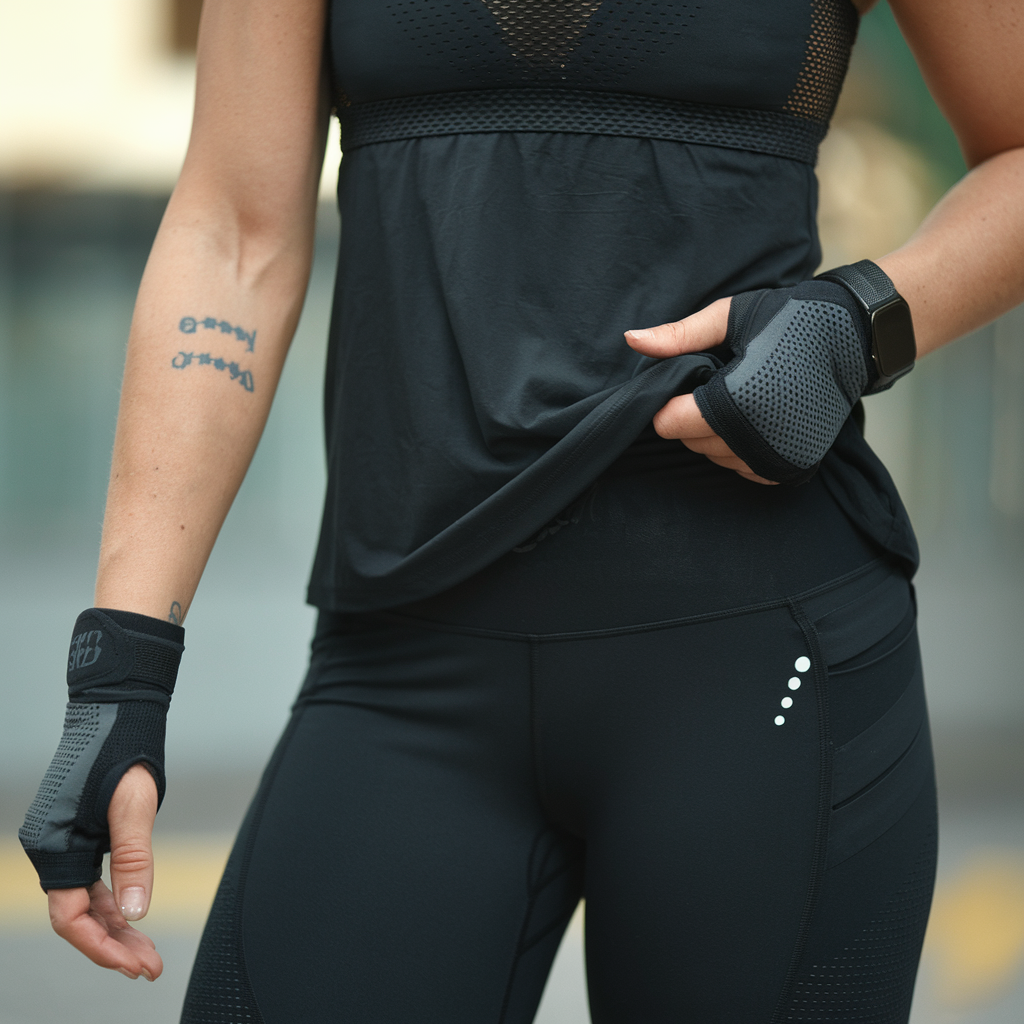
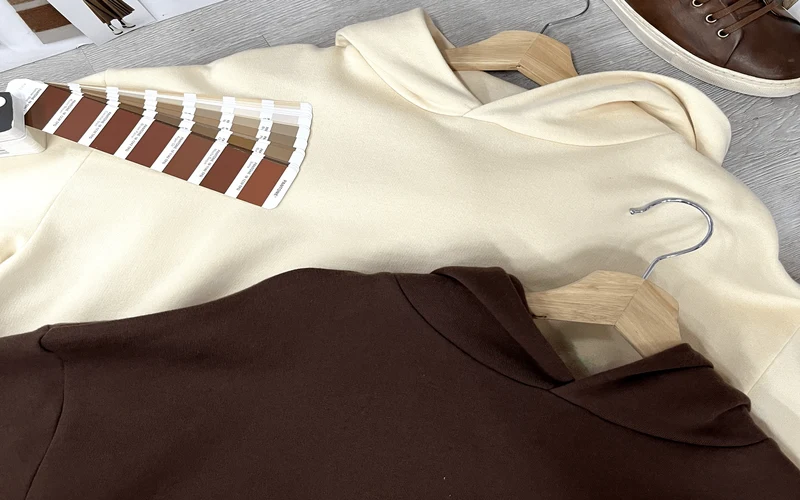

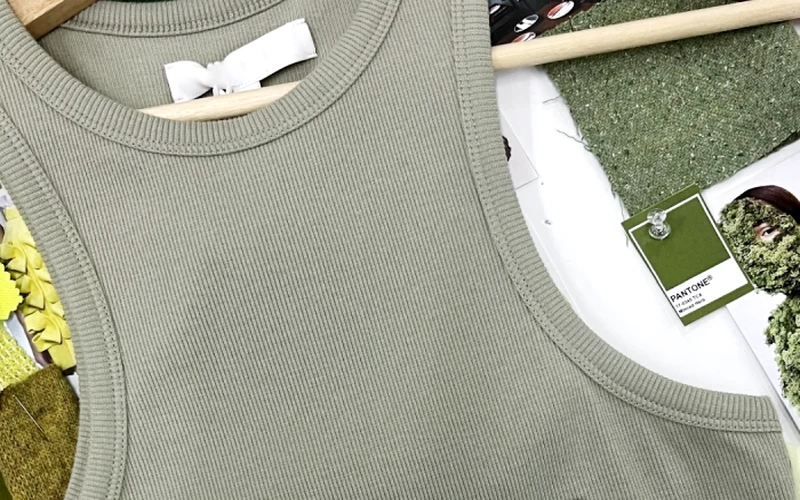
Cut-and-sew activewear operates with flexible MOQs starting at 150 to 200 units per style/colorway. 3D seamless activewear starts at 250 to 350 units due to circular machine cylinder calibration. Prototyping and fit approval samples take 2 to 4 weeks, while bulk manufacturing takes 4 to 6 weeks. Overland road transit to major European fashion hubs (London, Paris, Berlin, Milan) takes 48 to 72 hours with zero customs tariffs.
5. Sourcing & Tech Pack Checklist for Activewear Brands
When submitting your collection brief to our activewear desk, providing complete engineering callouts prevents sampling revisions. Ensure your tech packs include the following five specifications:
- Fabric Density & Composition: Specify yarn origin (e.g., GRS Q-NOVA® recycled nylon vs virgin nylon 6.6) and target GSM (220–280 GSM for squat-proof leggings).
- Seam Callouts: Clearly designate ISO 607 Flatlock for main body seams and ultrasonic bonding for hems and waistbands.
- Gusset Geometry: Include exact width and length of diamond or triangle gussets with cotton-lined interior specifications.
- Waistband Engineering: State whether the waistband requires internal framilon elastic tape, high-density power mesh, or folded self-fabric.
- Branding Execution: Specify 3D raised matte silicone heat-transfers, reflective 3M transfers, or knitted-in seamless jacquard logos.